

-
 Find Relief. Feel Better.Start with a FREE TMS INFO CALLCheck My Eligibility
Insurance coverage for TMS can be confusing because approval is not based solely on the treatment name. It’s usually based on your diagnosis, symptom severity, treatment history, and the specific requirements of your plan for medical necessity. We provide TMS treatment for depression Philadelphia patients can trust, and we help guide you through the insurance process from start to finish.
The cost of TMS treatment in Philadelphia varies depending on your insurance coverage, deductible, and plan requirements. For patients whose insurance approves treatment, out-of-pocket costs are often limited to standard copays or coinsurance. Without insurance coverage, total treatment costs depend on the number of sessions required. Because every plan is different, the most accurate way to determine your cost is to schedule a free coverage consultation so we can review your benefits.
Spark TMS regularly works with major insurers and can help you verify benefits, understand prior authorization requirements (if your plan has them), and gather what’s typically needed so you are not stuck in a loop of phone calls.
In many cases, yes. Most major insurers cover TMS for qualifying patients, but coverage is plan-specific. Some plans require prior authorization before treatment starts, and many require documentation that standard treatments did not provide enough relief.
If you want a deeper explanation of the approval process, common requirements, and the questions to ask your insurer, schedule a free consultation with us:
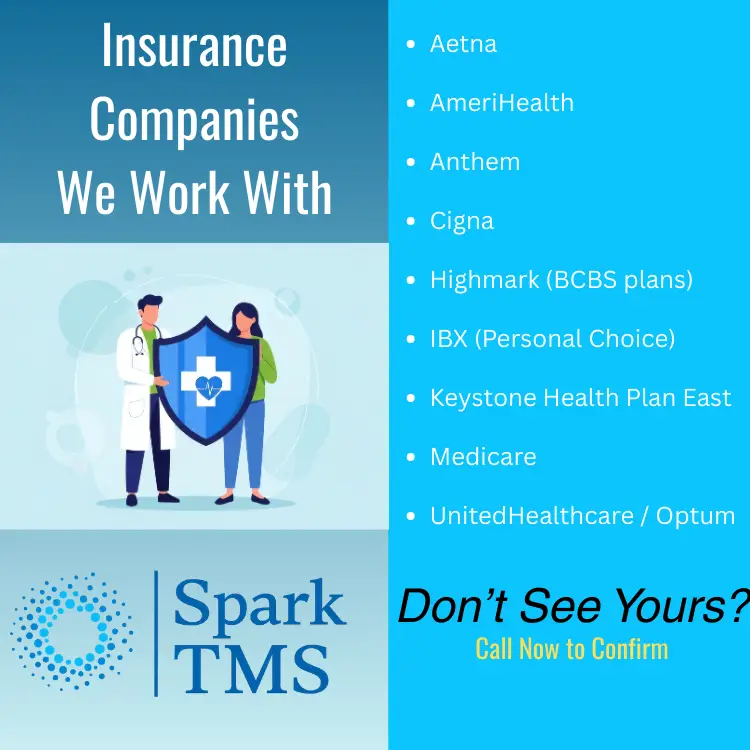
Spark TMS works with the following health insurers. If your insurer is not on this list, reach out, and we will check for you.
Note: Medicaid coverage can be limited and plan-specific. At Spark TMS, Pennsylvania Medicaid plans do not currently cover TMS treatment for our patients.
Every plan is different, but most coverage decisions revolve around a similar set of criteria:
If you have clinical depression (major depressive disorder, or MDD) or anxious depression, your plan may cover TMS when common requirements are met, such as:
Adults vs adolescents: Coverage for adolescents can vary by plan. From a regulatory standpoint, the FDA has cleared TMS systems for adolescents ages 15–21 for MDD (as an adjunct treatment). However, insurance coverage still depends on the policy tied to your plan.
If you want Spark TMS to check your benefits and walk you through likely requirements, schedule a telephone consult.

The fastest way to get a real answer is to book a quick phone consultation with our team. We’ll review your plan details, explain what your insurer typically requires for approval, and, with your permission, help verify benefits and outline next steps so you’re not left navigating insurance language on your own.
What to have ready (if possible):
Coverage and authorization decisions depend on your individual plan. We’ll help verify and guide the process, but final approval comes from the insurer.
Medicare coverage is often guided by Local Coverage Determinations (LCDs), which can vary by region. One widely used Medicare LCD (L34998) covers TMS for adults with severe MDD when criteria are met (including prior unsuccessful medication trial or intolerance) and does not consider OCD medically reasonable and necessary under that LCD.
If you have Medicare Advantage, your plan may follow Medicare guidance or apply additional plan rules, so verification is still important.
Most insurance coverage is tied to major depressive disorder rather than anxiety alone. If you have anxious depression (MDD with significant anxiety symptoms), coverage typically follows the MDD criteria your plan uses. Some TMS systems have FDA-cleared indications tied to depression with comorbid anxiety symptoms, but coverage still depends on how your insurer defines medical necessity for your diagnosis.
This varies by insurer and plan. Some coverage frameworks allow approval after one failed medication trial (common in certain Medicare policies), while some commercial plans specify multiple trials, sometimes across different medication classes.
When you call your insurer, ask what they require for “adequate dose and duration” and whether trials must be from different classes.
Many plans do. Prior authorization means your insurer requires clinical documentation and approval before treatment begins. Some Pennsylvania-managed plans explicitly require prior authorization for TMS.
Your insurer can tell you whether it’s required and what documents they need.
A common coverage structure is up to 30 sessions, often delivered 5 days per week, followed by a taper schedule.
Your plan may authorize fewer or more, depending on policy, progress documentation, and medical necessity.
The list reflects insurers we commonly work with, but it’s not the full universe of plans that may cover TMS. The next fastest step is to contact us, and we will check your plan details.